
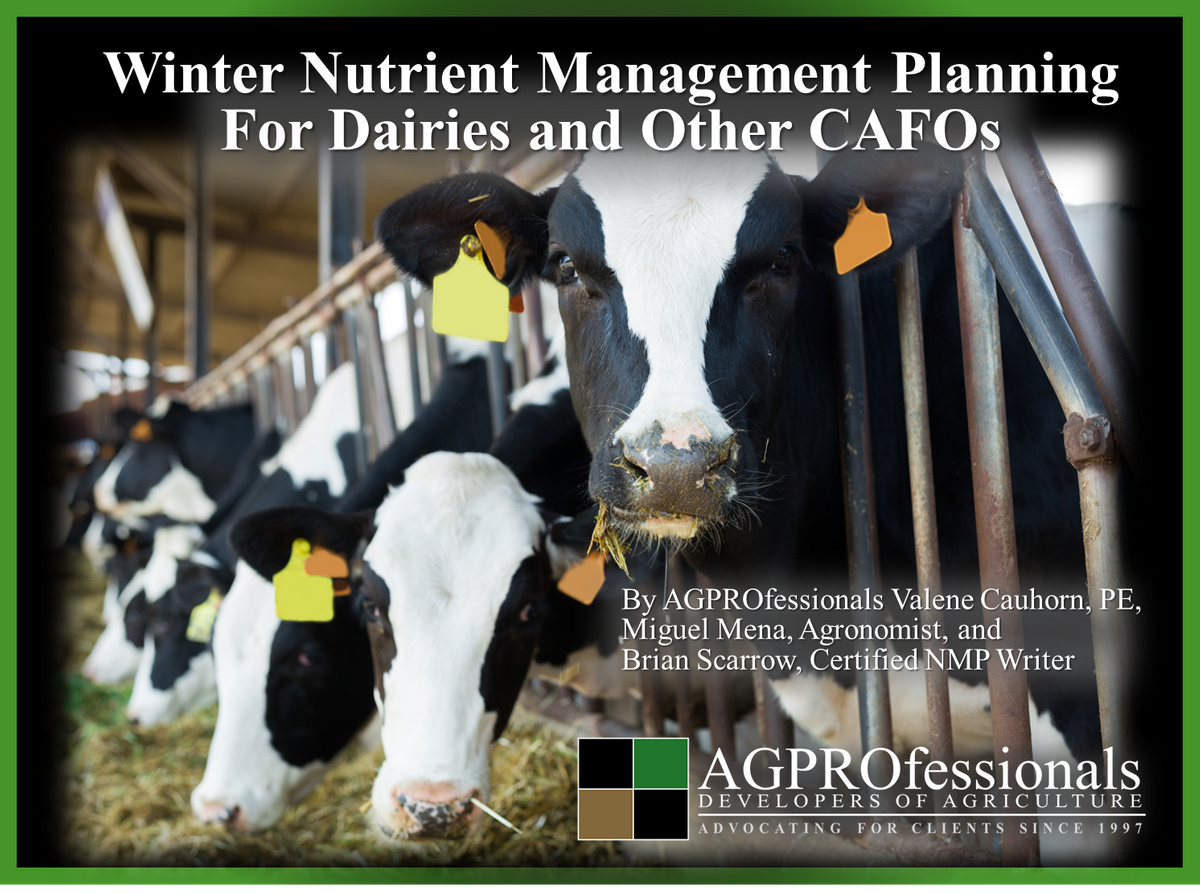
Winter Nutrient Management Planning for Dairies and Other Confined Animal Feeding Operations
By AGPROfessionals Valene Cauhorn, PE, Miguel Mena, Agronomist, and Brian Scarrow, Certified NMP Writer
** See the handy WINTER NUTRIENT MANAGEMENT PLANNING CHECKLIST attached **
As winter approaches, dairies and CAFOs, especially those in colder climates, enter a critical planning phase. While cold-weather preparation often focuses on herd comfort, equipment maintenance, and feed inventory, nutrient management is equally important for protecting farm resources and maintaining regulatory compliance.
Cold temperatures, frozen ground, snow cover, and spring thaw events significantly increase the risk of nutrient runoff and loss. A proactive nutrient management strategy helps safeguard manure nutrients, preserve soil health, protect water quality, and position operations for a successful growing season ahead.
Assess Manure Storage Readiness
Adequate manure storage capacity is essential during winter months when land application is limited or prohibited. Prior to winter, dairy operators should confirm that lagoons and storage facilities can safely accommodate manure, parlor process water, and winter runoff.
Key steps include:
- Reviewing current lagoon or storage levels.
- Inspecting structures for leaks, liner damage, burrowing animals, or vegetation concerns.
- Identifying contingency options if storage capacity becomes constrained. Winter storms or prolonged freezing conditions can delay spring application windows, leaving little margin for error if storage is already near capacity.
Plan Fall Applications Strategically
Some operations reduce winter storage pressure by applying a portion of manure in early fall. When fall applications are used, careful timing and placement are essential to reduce nutrient loss.
Manure or wastewater should never be applied to frozen or snow-covered soils due to the high risk of runoff during thaw events. You’ll need to comply with your state’s regulations. Where applications are allowed, incorporating manure through injection or light tillage helps keep nutrients in place and available for future crop uptake. All applications should adhere to required setbacks and buffer zones to protect surface water.
Use Cover Crops to Retain Nutrients
Cover crops and double-cropping systems are valuable nutrient-management tools, particularly after fall manure applications. Crops such as rye or triticale establish quickly, reduce erosion, stabilize soils, and capture residual nutrients that might otherwise be lost over winter.
In some cases, legume blends can provide additional nitrogen benefits while still protecting water quality. Cover crops may also offer grazing opportunities in the fall or early spring, creating added operational value.
Review and Update Nutrient Management Plans
Winter is an ideal time to evaluate and update Nutrient Management Plans (NMPs). Accurate records not only support regulatory compliance but also provide insight into long-term soil fertility and nutrient trends.
Dairies and CAFOs should ensure manure testing is completed annually for all land-applied manure streams, align nutrient applications with crop removal rates, and confirm land availability for future applications. Soil testing prior to land application helps determine annual nutrient needs and avoids over-application. Some states will require you to update your phosphorus indexing on an annual basis.
Prepare for Spring Thaw Conditions
Snowmelt and early spring runoff present some of the highest risks for nutrient loss. Preparing in advance helps protect nutrients as soils warm.
Effective preparation includes maintaining grassed waterways and buffers, ensuring berms are intact to prevent off-site runoff, inspecting drainage systems and tile outlets, and managing high-traffic or high-accumulation areas such as winter lots and feeding zones.
Consider Nutrient Management Inside the Barn
Nutrient efficiency begins well before manure reaches the field. Feeding and housing management directly influence nutrient loads and storage demands.
Balanced rations help prevent overfeeding nutrients like phosphorus, which increases manure concentrations. Clean barns and lots reduce runoff risk, while well-managed bedding programs help control moisture and manure volume. Addressing water leaks promptly is also critical, as excess water can quickly overwhelm storage systems during the winter months.
Planning for Long-Term Success
Winter nutrient management is more than meeting seasonal challenges. It’s about protecting the long-term productivity and sustainability of dairy operations. By evaluating storage capacity, managing applications responsibly, utilizing cover crops, and planning for spring runoff, dairies and other CAFOs can reduce risk, protect valuable nutrients, and enter the next growing season with confidence.
AGPROfessionals
Your trusted partners in nutrient management and regulatory compliance.