
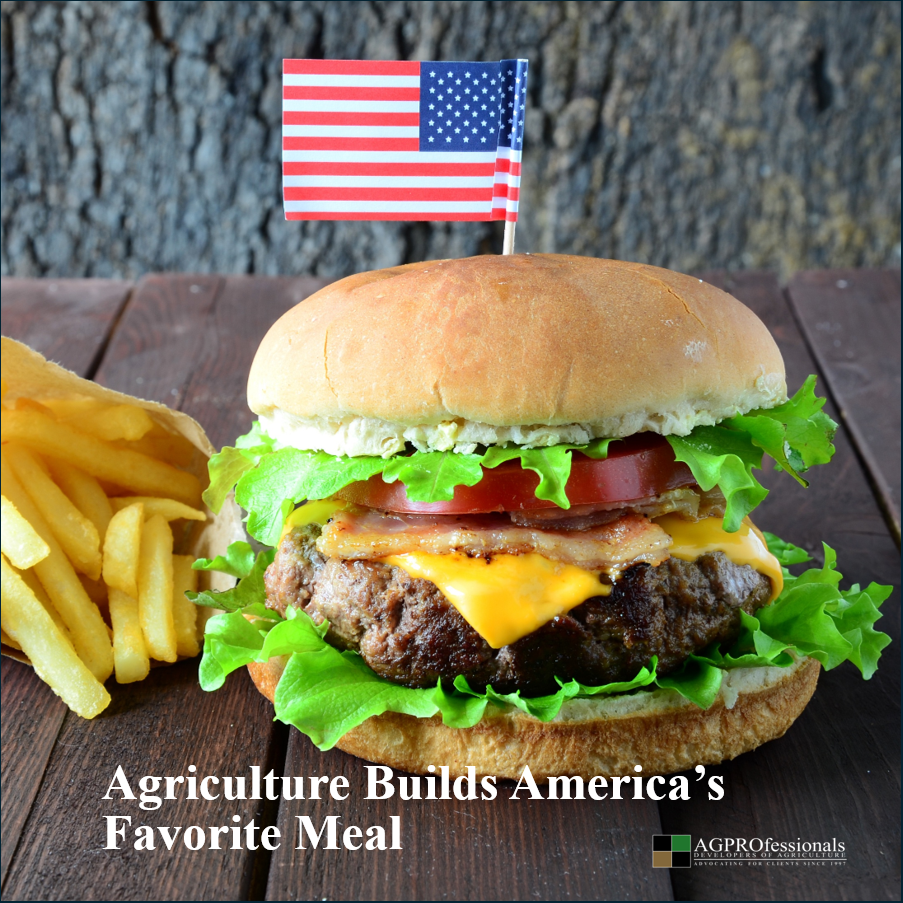
Agriculture, Cheeseburgers, French Fries, and America’s 250th Birthday
From Pasture to Plate, Agriculture Builds America’s Favorite Meal
A recent YouGov survey for CBS News revealed that hamburgers are the most representative food of America. The cheeseburger and fries are staples that are familiar, satisfying, customizable, and deeply rooted in American culture. As the United States marks 250 years, the cheeseburger and fries serve as a simple yet meaningful way to honor those who feed the nation.
Beneath this iconic meal lies something even more essential than tradition: agriculture, which is involved at every stage. This meal symbolizes independence, innovation, hard work, and choice. It reflects ranchers caring for cattle, dairy farmers producing milk, crop farmers growing wheat and potatoes, vegetable growers supplying fresh toppings, and countless agricultural professionals supporting food production from soil to table. From the beef in the patty to the wheat in the bun, the milk in the cheese, the potatoes in the fries, the vegetables on top, and even the cooking oil, the cheeseburger and fries serve as a strong symbol that agriculture sustains America.
Celebrate agriculture and America’s 250th birthday with us by looking at how agriculture provides every ingredient in the cheeseburger and French fries, the meal many say best represents America.
Agriculture Makes the Meal Possible
The cheeseburger and French fries meal represents more than just a menu choice; it reflects a snapshot of American agriculture. This includes cattle ranching, dairy farming, wheat and potato cultivation, vegetable and oilseed crop production, poultry, specialty crops, food processing, transportation, refrigeration, packaging, and the entire supply chain from farms to grocery stores and restaurants. All these depend on land, water, soil, infrastructure, equipment, scientific knowledge, responsible stewardship, and skilled workers. Additionally, modern agriculture involves careful planning, such as land use, engineering, permits, environmental regulations, water management, facility design, nutrient control, transportation logistics, and long-term strategies.
The food Americans eat is shaped by decisions made across farms, dairies, processing plants, communities, and government agencies nationwide. Therefore, agriculture should be a key part of every discussion about America’s future.
The Beef Patty Starts with America’s Cattle Producers
At the heart of the cheeseburger is the beef patty, and behind it are countless Americans, cattle ranchers, farmers, feed growers, veterinarians, nutritionists, truckers, processors, and others who work together to deliver high-quality beef to consumers.
Beef is a vital nutritional source, providing high-quality complete protein essential for muscle growth, maintenance, and overall health. It also supplies important nutrients like iron, zinc, selenium, phosphorus, niacin, riboflavin, vitamin B6, and B12. For many families, ground beef remains a practical, versatile, and nutrient-rich meal option, used in everything from burgers and tacos to casseroles, soups, and skillet dishes.
Beef production starts well before the burger hits the grill. Cattle depend on land, water, forage, feed grains, animal care, genetics, nutrition, and responsible management. Ranchers raise cattle on pasture and rangeland, often on land unsuitable for crops. Farmers cultivate hay, corn, silage, sorghum, and other feed ingredients that support cattle nutrition and beef production. Agricultural professionals help manage land use, water resources, environmental compliance, facility planning, and infrastructure to ensure successful livestock operations.
Cheese Connects the Cheeseburger to Dairy Farms
A cheeseburger starts with dairy farmers. From cheddar and American to Swiss, pepper jack, provolone, or other favorites, cheese embodies a key sector of agriculture working together to complete the meal.
Cheese comes from milk, which is produced by dairy cows cared for by dedicated farm families and dairy teams. Dairy farming also relies on crop production, as cows need carefully balanced feed. Cheese enhances the burger with flavor, texture, and nutrition. It supplies protein, calcium, phosphorus, and other nutrients vital for bone health, muscle function, and overall wellness.
The Bun Begins in a Wheat Field
Whether toasted or soft, the bun serves as a reminder that crop production is just as vital to a cheeseburger as livestock farming. The bun might seem simple, but it symbolizes a complex agricultural journey starting in the field. Farmers plant, cultivate, harvest, and transport wheat, which is then milled into flour that forms the base of the hamburger bun. Depending on the recipe, it may contain ingredients like yeast, sugar, salt, eggs, milk, butter, or vegetable oil, each with its own agricultural origin. Wheat supplies carbohydrates for energy, and enriched flour can add nutrients like iron and B vitamins. Whole-grain versions offer extra fiber and nutrients.
Lettuce, Tomatoes, Onions, and Pickles Add Produce to the Plate
The toppings on a cheeseburger bring fruit and vegetable production into the story.
Lettuce adds crunch and freshness. Tomatoes add color, flavor, and nutrients such as vitamin C and lycopene. Onions add sharpness or sweetness, depending on how they are prepared, and they also provide plant compounds that contribute to a balanced diet. Pickles begin as cucumbers, another crop grown by farmers, then preserved through brining or fermentation to create the familiar tangy flavor many people expect on a classic burger.
These ingredients may seem like small additions, but they reflect the diversity of American agriculture. Vegetable growers, greenhouse producers, irrigation specialists, harvest crews, food safety teams, packers, distributors, and retailers all play a role in making the fresh produce Americans expect to find on their favorite meal.
Condiments Come from Agriculture Too
A cheeseburger is often customized with different condiments, each adding another link to the agricultural supply chain. Ketchup, mustard, mayonnaise, barbecue sauce, and special sauce all originate from agriculture. Ketchup is made from tomatoes, mustard from mustard seeds, and mayonnaise depends on eggs and vegetable oil. Barbecue sauce may include ingredients like tomatoes, peppers, onions, garlic, sweeteners, spices, vinegar, and other farm-grown components. Even the sugar, corn syrup, honey, vinegar, salt, herbs, and spices in condiments derive from agricultural production, food processing, and farming.
French Fries Begin with Potato Farmers
No classic cheeseburger meal is complete without French fries. French fries originate from potatoes, one of the most recognizable and adaptable crops in American cuisine. Growing potatoes involves detailed soil preparation, planting, irrigation, pest control, harvest timing, storage, transportation, and processing. Growers must oversee factors such as soil health, water resources, equipment, labor, weather conditions, market demands, and food safety standards.
Potatoes supply carbohydrates for energy and are rich in potassium, vitamin C, vitamin B6, and fiber, especially when the skin is eaten. The cooking oil for frying or baking is also agricultural, often derived from soybeans, canola, corn, sunflower, or peanuts. Salt, seasonings, and dipping sauces further connect French fries to agriculture. From farm to table, French fries embody the journey of crop cultivation, food processing, transportation, and the efforts of those moving food from fields to families.
Celebrating America’s 250th Birthday by Celebrating Agriculture
The next time Americans gather around a grill, order a burger at a local restaurant, or share fries at a county fair, it’s important to remember what that meal signifies. It’s not just America’s favorite food; it’s a reflection of agriculture in action. For 250 years, agriculture has helped build, sustain, and strengthen our nation. Looking ahead, farmers, ranchers, dairy producers, and agricultural professionals will continue to feed people, support communities, and shape the future of the country and at AGPROfessionals we are proud to have a part in the process.