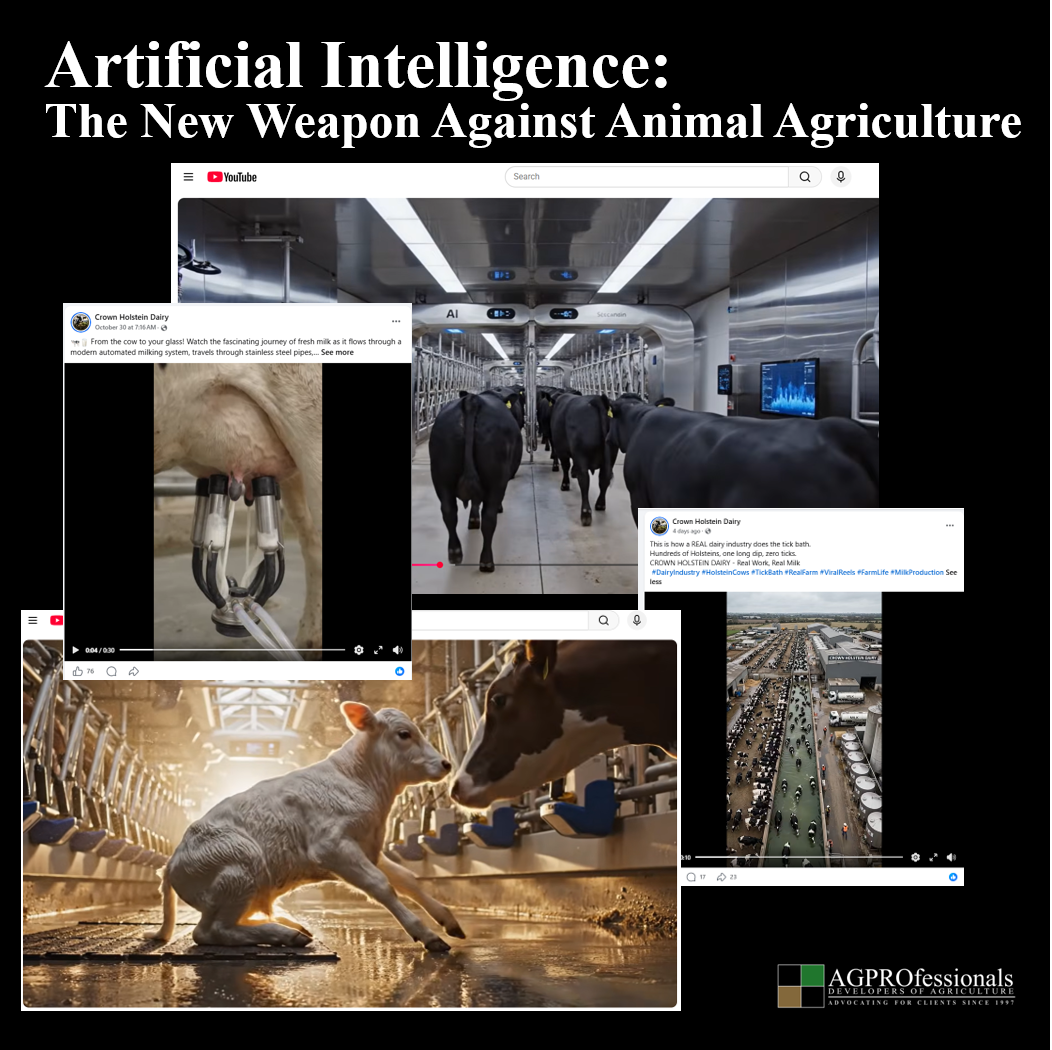
Artificial Intelligence: The New Weapon in Animal Rights Fundraising and Campaigns Against Agriculture
Artificial intelligence (AI) is transforming how organizations communicate, fundraise, and shape public opinion. For animal rights groups seeking to eliminate or restrict animal agriculture, AI can accelerate campaigns, expand their reach, and produce emotionally charged content at unprecedented speed. Tasks once requiring film crews, investigators, designers, and substantial funding can now be handled with AI-generated images, CGI, automated messaging, and digital marketing. Livestock producers are already seeing the impact, as evidenced by a recent social media post about a fake dairy that went viral, amassing over 40K followers for the page itself and even more video views. Anyone familiar with livestock production could easily tell the video showed a fake dairy. However, it raises the question: how many people who have never set foot on a dairy or been within 100 yards of a cow thought it was real?
For America's farmers, ranchers, dairy producers, and livestock businesses, this raises serious concerns. Fabricated images and videos are becoming nearly indistinguishable from real footage, especially for those already unfamiliar with livestock, so how can consumers tell what’s authentic? More importantly, what happens when emotionally manipulative content is used to raise funds and influence agricultural policy? Public outrage can also shift consumer choices, corporate sourcing, legislation, and regulation, affecting private property rights and farm operations.
Animal Rights Organizations Are Already Investing in AI
The animal rights movement is not simply experimenting with artificial intelligence. Organizations are actively researching how to integrate AI into their communications, fundraising, and campaign strategies.
A 2024 study by the animal rights group Open Paws, summarized by another animal rights data group, Faunalytics, surveyed 194 participants representing 142 animal rights organizations. The findings demonstrate substantial interest in using AI to advance their objectives. These findings matter because they show that AI is becoming part of the organizational infrastructure for ideological animal rights groups. According to the study:
- 51% of respondents reported using AI for writing and editing
- 55% used AI for brainstorming
- 24% used AI for creating media
- 20.1% used AI for grant writing and fundraising support
- 53% expressed interest in automating tasks
- 51% are interested in using AI to predict outcomes
- 45% are interested in using AI to improve digital advertising
PETA's CGI Controversy: A Warning About Manufactured Animal Abuse
Concerns about fabricated animal-abuse imagery go back years. In June 2017, Mashable exposed a proposed PETA campaign featuring disturbing CGI footage of an abused cat. The agency behind it reportedly asked Mashable to share the video without first disclosing it was fictional. The plan was to spark outrage before revealing the cat was computer-generated. PETA has since used AI-generated art and computer-generated animals in anti-dairy campaigns, including imagery meant to influence purchases. The distinction matters: labeled fiction is persuasion; fabricated footage presented as real evidence can mislead consumers and harm reputations. Most importantly, it demonstrates a complete lack of integrity when it comes to pushing the animal rights ideological agenda.
Research Confirms That Animal Videos Can Influence Donations
A 2024 study in Scientific Reports offers evidence that disturbing imagery can influence public behavior. In an experiment with about 3,300 participants in France, researchers found that watching undercover footage from a pig farm increased donations. The video also boosted support for some animal-related policies, including a petition restricting large modern farms, and may have changed beliefs about agricultural practices. Now, with the ease of creating video campaigns with AI, quickly producing, adapting, and distributing emotionally powerful content could give unscrupulous groups a significant advantage.