
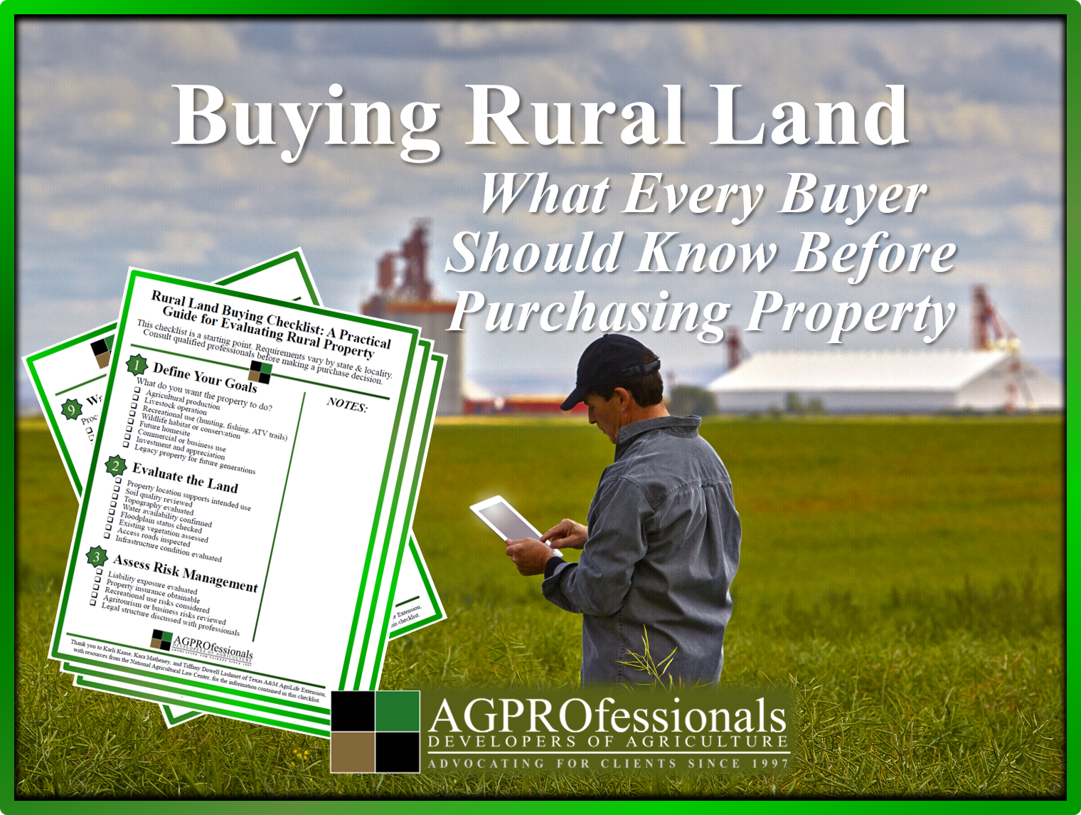
At AGPROfessionals, we've worked with agricultural producers, landowners, investors, developers, and rural businesses across the country. We've learned that the most successful land purchases begin long before closing day.
By the way, please download and use the handy checklist we've included at the end of this article!
Purchasing rural property is exciting. Whether your vision includes a working farm, a cattle ranch, a dairy, recreational property, a future homesite, or a long-term investment, buying land is about much more than finding the right acreage. Every property has opportunities—and limitations. The key is to understand both before you purchase.
Define Your Goals Before You Shop
Every land purchase should begin with one simple question: What do you want this property to accomplish?
Your intended use will influence virtually every decision that follows, including:
- Property location
- Acreage requirements
- Water availability
- Infrastructure needs
- Financing
- Regulatory requirements
- Long-term management costs
An ideal cattle production property may not be the best recreational property. Likewise, land that appears perfect for a future homesite may have significant permitting, drainage, or infrastructure challenges.
Clearly defining your objectives helps ensure you evaluate properties through the right lens.
Evaluate More Than Location
Location certainly matters—but productive rural property is defined by much more than its address. Important factors include:
- Soil characteristics
- Topography
- Water resources
- Climate and rainfall
- Existing improvements
- Access
- Vegetation
- Drainage
- Utilities
- Long-term development potential
Even neighboring properties can have dramatically different capabilities and costs. Understanding these characteristics early can prevent expensive surprises after closing.
Look Beyond the Purchase Price
Acquisition costs (asking price, price per acre) are often only the beginning. One of the biggest hidden expenses is infrastructure. Bringing utilities, improving access roads, or developing reliable water sources can significantly affect the true cost of ownership.
Depending on the property, additional investments may be required, such as:
- Surveys
- Title research
- Boundary improvements
- Fencing
- Roads
- Utility extensions
- Wells or water development
- Septic systems
- Drainage improvements
- Insurance
- Property taxes
- Ongoing maintenance
Understand the Property Rights You're Purchasing
Not every property conveys the same ownership rights. Depending on previous transactions, certain rights may have been reserved or conveyed separately, including:
- Mineral rights
- Water rights
- Timber rights
- Wind or solar development rights
- Hunting rights
Perform Comprehensive Due Diligence
Every rural property has a history. Existing easements, utility corridors, pipelines, leases, and access agreements can affect how property may be used. Conducting thorough due diligence before closing helps buyers fully understand what they are—and are not—purchasing.
A thorough evaluation should include:
- Boundary verification
- Current survey review
- Title review
- Ownership history
- Easements
- Encroachments
- Existing leases
- Deed restrictions
- Legal access
- Tax status
Investing in proper due diligence before closing is almost always less expensive than resolving unforeseen issues afterward.
Understand Local Regulations
Rural land is not free from regulation. Local, state, and federal requirements may affect how property can be used. Understanding these requirements before purchasing allows buyers to make informed decisions and avoid costly delays.
Depending on location and intended purpose, buyers should investigate:
- Zoning
- Building requirements
- Subdivision status
- Septic regulations
- Well permits
- Environmental regulations
- Floodplain restrictions
- Wetland requirements
- Agricultural exemptions
- Special-use tax programs
- Livestock setbacks
- Road maintenance agreements
Think Beyond the Purchase
Purchasing rural property is only the first step. Long-term success often depends on thoughtful planning for:
- Infrastructure improvements
- Water management
- Drainage
- Facility planning
- Agricultural operations
- Future expansion
- Succession planning
- Ongoing maintenance
The earlier these considerations are incorporated into the purchase process, the greater the opportunity to maximize the property's long-term value.
How AGPROfessionals Helps
Buying rural property involves more than a real estate transaction. It often requires technical expertise across multiple disciplines. AGPROfessionals provides integrated consulting services that help clients evaluate opportunities, reduce risk, and plan for long-term success. Depending on your project, our team can assist with:
- Agricultural and rural real estate services
- Surveying
- Civil engineering
- Site planning
- Facility design
- Drainage and water management
- Irrigation planning
- Planning and permitting
- Agricultural and environmental consulting
- Land development strategy
By bringing these services together under one roof, we help clients make informed decisions throughout every stage of landownership, from initial evaluation to long-term stewardship.
The Bottom Line
Buying rural land is an investment in more than property. It's an investment in your future.
The most successful buyers take the time to understand the land, evaluate the risks, plan for future improvements, and surround themselves with experienced professionals who understand the complexities of rural property.
Whether you're purchasing your first acreage, expanding an agricultural operation, or investing in land for future generations, careful planning today can protect your investment for years to come.
------------------------------------------------------------------
Texas A&M AgriLife Extension is a partner of the National Agricultural Law Center (www.nationalaglawcenter.org) at the University of Arkansas System Division of Agriculture, which serves as the nation’s leading source of agricultural and food law research and information. This material is provided as part of that partnership and is based upon work supported by the National Agricultural Library, Agricultural Research Service, U.S. Department of Agriculture.