
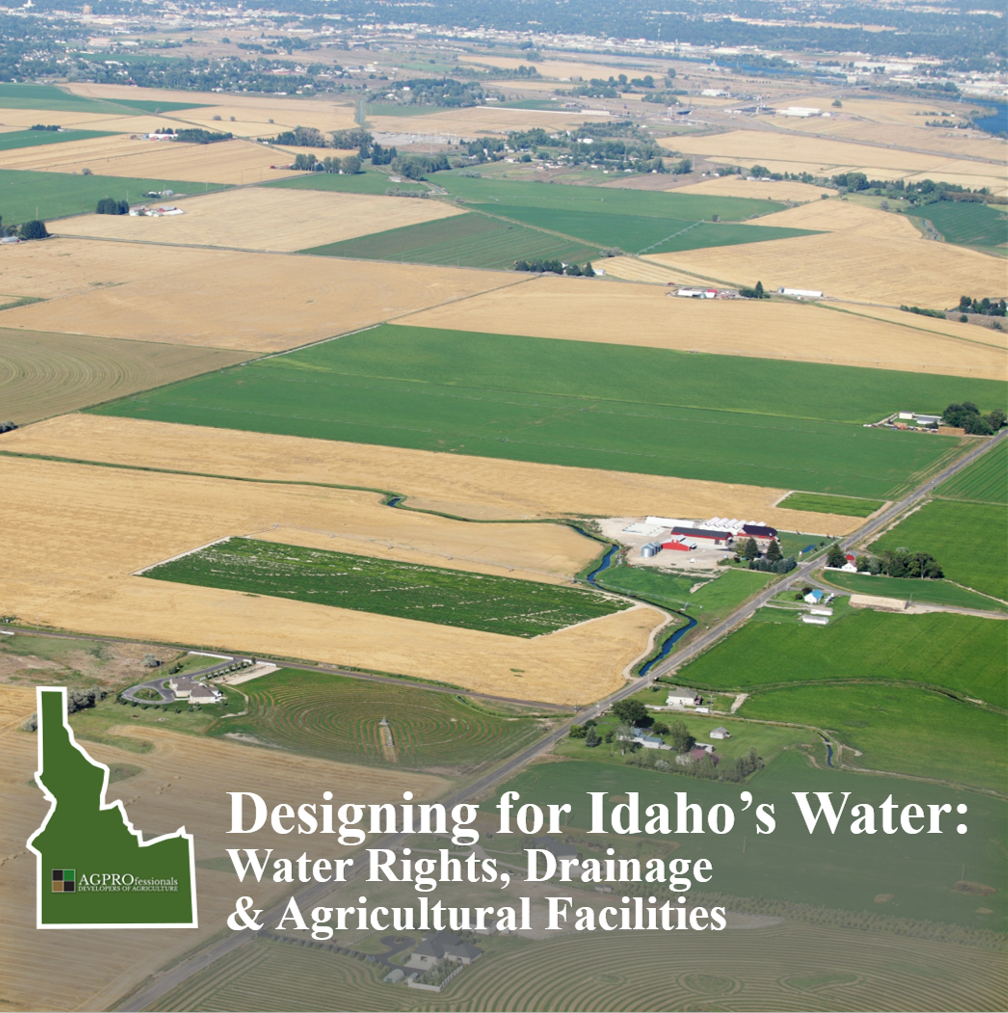
Designing for Idaho’s Water: Water Rights, Drainage & Agricultural Facilities
For Idaho producers, planning a new or expanded agricultural facility means assessing more than water needs. Consider water rights and supply, facility demands, drainage, stormwater, and erosion control; these factors are interrelated. Early design decisions affect cost, functionality, and regulations. Treat water as part of the facility, not an afterthought once the site is designed.
Start With the Water Right
When planning agricultural development, first ask: Do we have the legal right to use the water it requires? In Idaho, a water right authorizes public water use under specified conditions, including its source, quantity, flow rate, diversion point, location, period, and purpose. Before expanding an existing operation or purchasing property for a new development, it is important to understand:
- What water rights currently serve the property?
- What quantity and type of use are authorized?
- Where is the water diverted and where can it be used?
- Will the proposed project change the existing use?
- Will additional water be required?
- Could a transfer, amendment, or new water-right application be necessary?
A property may have water available, but that does not necessarily mean the existing water rights authorize the proposed use or provide the quantity needed for a new operation. Water-right considerations can also vary throughout Idaho, depending on the location and applicable basin requirements. For example, an existing property may be converting a portion of an irrigated farm field into a feedyard. If the irrigation water is primarily groundwater, a water transfer for a change of use can be used. If the irrigation water is primarily surface water, an alternate source of water will be needed. For these reasons, conduct water-right research early, before major design decisions.
How Much Water Does the Facility Need?
After clarifying water rights, determine the facility’s current demand and plan for future growth. Sizing wells, pumps, pipelines, storage, and other infrastructure for anticipated expansion may cost less than upgrading later. Depending on the operation, water use may include:
- Livestock drinking water
- Dairy parlor and milkhouse uses
- Equipment and facility washdown
- Dust control
- Domestic uses
- Irrigation
- Fire protection
- Other operational or process water
First, identify all freshwater sources needed for full build-out. Conservatively estimate average daily use, flow rate, and annual demand. Determine which water can be recycled and which must be potable. If changing the water right’s diversion point, define project phases and their water demands to minimize mitigation needs.
Design the Site Around Water
Getting water to the facility is only half the challenge; the site must also direct water safely across and around the property. Plan drainage early, before locating buildings and roads, since elevations, roads, feed storage, manure areas, livestock facilities, and other infrastructure affect water flow.
A well-designed agricultural site should keep clean water clean and prevent unnecessary contact between stormwater and areas where manure, feed, or other pollutants may be present. Directing clean runoff away from production areas can reduce the amount of water that needs to be managed within the facility while helping protect the operation and surrounding water resources. Directing clean runoff around your facility reduces the amount of stormwater your project site may have to manage. This may require evaluating:
- Existing drainage patterns
- Site grading
- Roof and paved-area runoff
- Snowmelt and irrigation water
- Livestock and manure areas
- Erosion potential
- Downstream impacts
Stormwater and Long-Term Planning
Idaho’s climate and terrain create stormwater challenges, including heavy rain, snowmelt, seasonal runoff, irrigation, and natural drainage. Solutions may include grading, swales, culverts, collection systems, detention or retention facilities, erosion controls, and roof and road drainage.
Good drainage design considers water sources, destinations, volume, and what it encounters—not just how quickly it leaves the property. Because agricultural facilities may serve operations for decades, producers should plan for future needs, including additional water, buildings, roads, utilities, and drainage changes.
Look at the Whole System
Water rights, supply, drainage, and stormwater are interconnected in agricultural development. Addressing them early helps identify challenges that design can solve. A successful project should consider:
Water Rights → What water is legally available?
Water Demand → How much water is needed today and in the future?
Infrastructure → What wells, pumps, storage, and distribution systems are required?
Site Planning → Where should buildings, roads, livestock areas, and other infrastructure be located?
Grading & Drainage → How will water move across and around the facility?
Stormwater Management → How will clean water be separated from areas requiring additional management?
Long-Term Planning → Can the system accommodate future growth or changes?
Bring Water Into the Conversation Early
Water is a critical, complex part of agricultural development. Assessing water rights and demand, drainage, stormwater, and future development before construction helps producers make informed investments and catch problems early.
At AGPROfessionals, we help agricultural producers assess engineering and regulatory needs for facility planning and development. We address site planning, grading, drainage, CAFO permits, and nutrient management to identify challenges early and provide practical solutions.
Good agricultural design starts with understanding the water.