
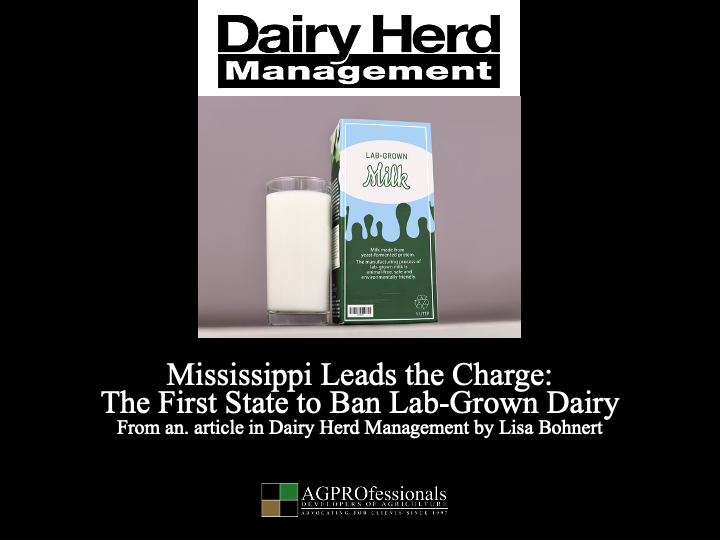
Several years ago, lab-grown dairy — produced through precision fermentation or cell-culturing techniques — emerged as a high-tech disruptor in the food industry. Startups and venture capitalists positioned these products as sustainable, animal-free alternatives to traditional milk, garnering significant media attention. However, U.S. dairy producers were quick to push back, dismissing these innovations as “fake milk.” Now, that initial momentum is hitting a legislative wall as states move to protect their agricultural heritage.
Mississippi’s Landmark Ban
Mississippi has officially become the first state in the U.S. to explicitly ban cell-cultured dairy products. This follows the passage of HB 1153, a bill that broadens the legal definitions of meat, manufactured protein, cultivated protein, insect protein, plant protein and cell-cultured dairy.
The legislation is designed to prevent the misbranding of dairy products and establishes strict labeling requirements and inspection authorities. Most notably, the law implements an outright ban on the manufacture, sale and distribution of lab-grown dairy products within the state.
Key Provisions of HB 1153
- Effective Date: July 1, 2026.
- Penalties: Violators face a fine of $500 per violation per day, with a maximum penalty of $10,000.
- Enforcement: The bill grants updated authority to state inspectors to ensure compliance and prevent “fake milk” from reaching shelves.
A Broader Trend of Protectionism
This move is part of a larger legislative effort in Mississippi to regulate alternative proteins. Last year, the state passed HB 1006, which banned lab-grown meat (effective July 1, 2025). Both bills were sponsored by Rep. Bill Pigott, signaling a consistent effort by state lawmakers to prioritize traditional livestock and dairy farming.
Mississippi agriculture commissioner Andy Gipson has been a vocal supporter of these measures. During a recent National Ag Day event, Gipson emphasized the importance of “real food for real people,” framing the ban as a victory for traditional agriculture against artificial alternatives.
“We are living in a time where it seems everything is artificial, and you wonder what is real. We’ve seen everything from fake grass, Astroturf, to fake meat, and now they’ve come up with lab-grown, or fake, milk. So today, we’re especially proud to be here to celebrate agriculture and to promote real food for real people. Thank you to our legislators for making Mississippi the first state in America to outlaw fake milk,” he said.
Industry Implications
Mississippi’s decision sets a precedent that other dairy-producing states may follow. While the lab-grown dairy industry continues to innovate globally, it now faces a fractured regulatory landscape in the United States, where state-level bans could significantly limit market access.
National Milk Producers Federation has consistently argued milk must come from a hooved animal. They have been a primary driver behind DAIRY PRIDE Act (Defending Against Imitations and Replacements of Yogurt, milk, and cheese to Promote Informed Dairy Choices). This federal legislation aims to force the FDA to enforce labeling standards that would prevent plant-based and lab-grown alternatives from using dairy terms like milk, cheese or yogurt.
As the lab-grown dairy industry continues to innovate globally, it now faces an increasingly fractured regulatory landscape in the U.S. State-level bans like Mississippi’s could significantly limit market access and complicate the path to commercialization for alternative protein companies.