
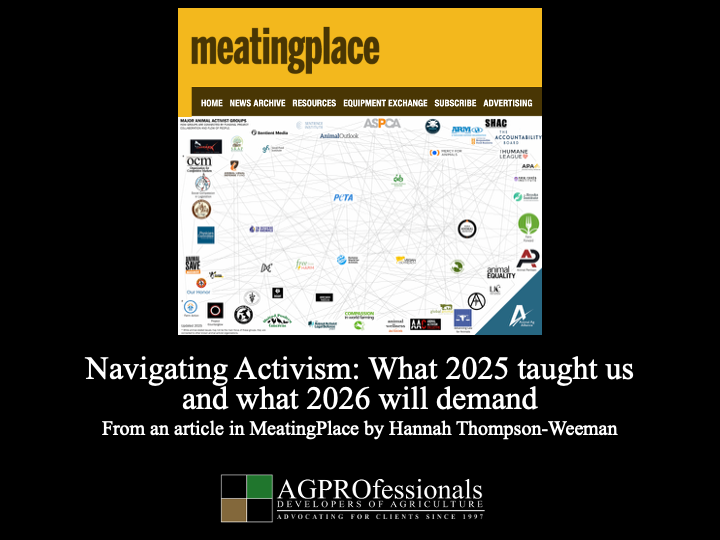
As 2025 comes to a close, it is clear that the pressures facing animal agriculture did not simply continue this year — they intensified. From escalating activist funding to evolving legal strategies and increasingly coordinated pressure campaigns, the landscape grew more complex by the month. At the Animal Agriculture Alliance, our focus remained steady: understanding these dynamics so the animal agriculture community can navigate them with clarity, confidence, and resilience.
Many people associate animal rights activism with dietary persuasion or campus protests. But 2025 reaffirmed what our monitoring has shown for years: The movement is heavily funded, highly coordinated, and shifting toward systemic influence rather than calling for individual behavior change.
Activist organizations continued receiving extraordinary financial support this year. In September, we released our latest Animal Activist Groups Web, including a concerning new statistic. Based on publicly available financial data, the groups featured in the web bring in more than $865 million annually — money used in part to fund anti-meat, anti-dairy, and anti-egg campaigns.
We often get questions about where these funds come from. Private foundations are a major player in the space. As one example, Open Philanthropy has channeled millions of dollars into animal activism in recent years, under the direction of staff previously with HSUS (now Humane World for Animals). Since 2016, they have awarded $88 million to “broiler chicken welfare” projects, $40 million to “cage-free reforms” and $40 million to supporting “alternatives to animal products.” Many of the supported grants go toward “operating funds” for activist groups, or underwriting corporate pressure campaigns.
In 2025, pressure campaigns intensified. We seemed to be reporting on store demonstrations, protests at company offices, and even personal attacks on executives on a weekly basis. Scorecards and investor resolutions were also used strategically. Resolutions focused on animal welfare all failed at shareholder meetings, but activists used the process to gain meetings with leadership and push for incremental commitments.
In another recurring conversation topic at conferences throughout the year, activists emphasized that local engagement is where they expect to see the most success. They encouraged attendance at city committee meetings and focused on municipal ordinances related to fur, foie gras, and what they call “extreme confinement.” Incrementalism remained central to their philosophy. Start with a small ask, secure a win, and then continue pressing for more.
Activists offered a further peak into future plans, with groups such as Direct Action Everywhere continued promoting open rescue and framing animal theft as morally justified civil disobedience. Multiple conferences highlighted cross-movement collaboration, with activists aligning with climate justice and other causes. Legal-focused animal activist organizations focused on expanding standing, influencing regulatory oversight, and integrating climate litigation strategies into animal agriculture cases. Transparency battles, FOIA disputes, and regulatory authority over cell-based meat were also emphasized.
Our work in 2026 will continue to focus on tracking these trends, analyzing emerging strategies, and equipping stakeholders across the food system with timely and actionable intelligence.
As we prepare for the year ahead, I encourage anyone who values factual, constructive dialogue about animal agriculture to consider supporting the Alliance today: Giving Tuesday. Your contributions help ensure we can continue monitoring activist strategies, providing objective insight, and helping the entire food system respond effectively. Thanks to the generosity of the U.S. Poultry and Egg Association, donations today will be matched – allowing your support to go even further.
The pressure is not slowing down, and neither are we.