
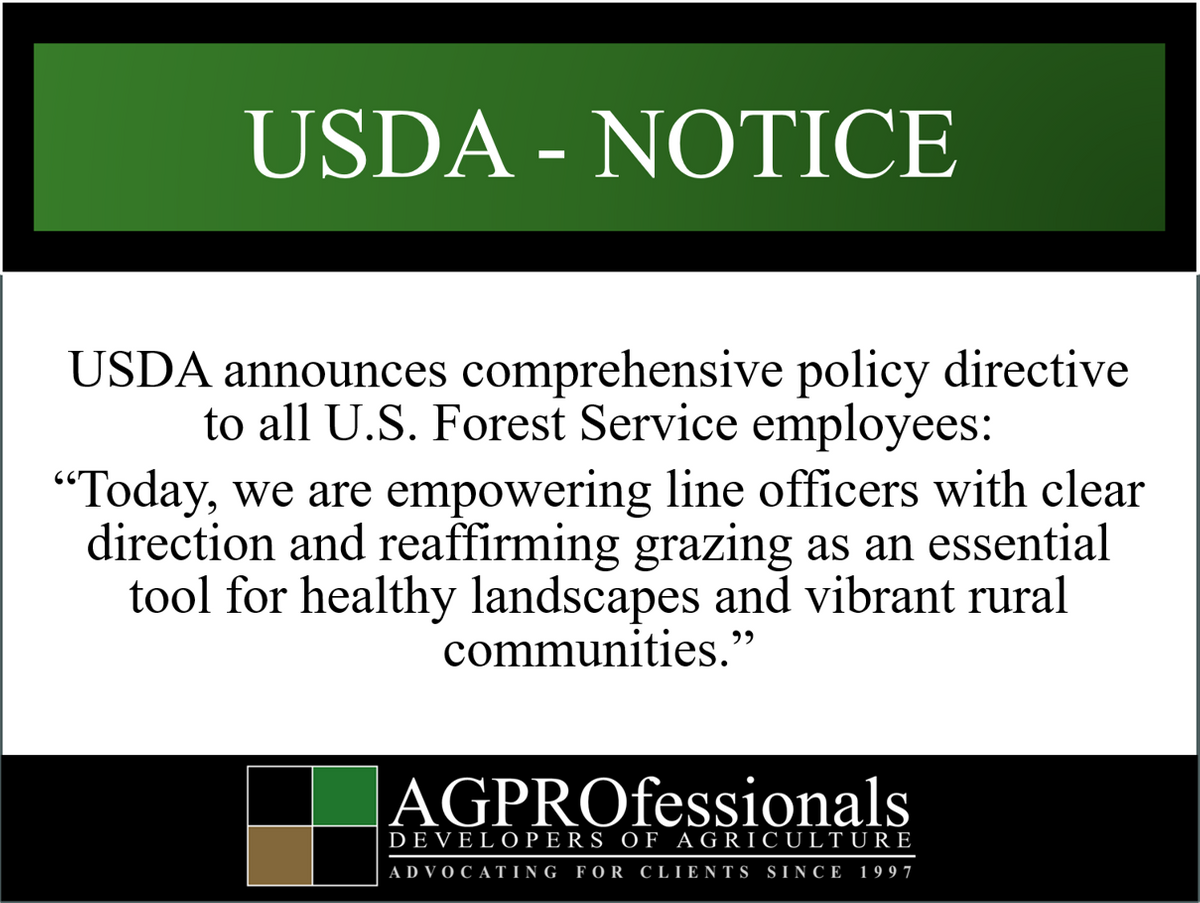
The U.S. Department of Agriculture (USDA) recently announced a significant policy directive to restore and expand livestock grazing opportunities on National Forest System lands. The June 2026 directive reinforces grazing as a priority land management tool and seeks to streamline permitting, reopen vacant allotments, and strengthen collaboration between federal agencies and livestock producers.
For ranchers who depend on public lands grazing, the announcement signals a renewed federal commitment to maintaining working landscapes and supporting rural economies. It also raises important questions about how grazing fits into broader land management, conservation, and wildfire mitigation strategies for landowners, agricultural stakeholders, and natural resource professionals
Grazing's Historic Role on Public Lands
Livestock grazing has been part of the management framework for western public lands for more than a century. Millions of acres administered by the U.S. Forest Service and Bureau of Land Management (BLM) are managed through grazing permits and allotments that allow livestock producers to utilize forage resources while operating under established management plans.
In many regions, public lands grazing is not simply a business convenience; it is an essential component of agricultural viability. Ranching operations often rely on a combination of private property, leased lands, and federal grazing allotments to maintain herd sizes and economic sustainability.
Beyond agricultural production, advocates of managed grazing point to its role in reducing fine fuels, maintaining open landscapes, controlling invasive vegetation, and supporting stewardship of rangeland resources. Properly managed grazing can complement broader land management objectives, particularly in areas facing increasing wildfire risk.
Key Components of the USDA Directive
The agency also emphasized that approximately 23,000 permittees and lessees rely on public grazing lands across the country. By streamlining processes and prioritizing grazing, USDA intends to support domestic livestock production while maintaining active management of federal lands.
According to the USDA, the directive focuses on five primary objectives:
- Expanding access by prioritizing vacant and closed grazing allotments for permitting.
- Increasing management flexibility to help keep working lands in production.
- Reducing administrative delays associated with permit renewals and allotment authorizations.
- Providing ranchers with a stronger voice in grazing-related decisions.
- Improving agency engagement and customer service for permittees.
Potential Benefits for Agriculture
Permitting timelines and administrative uncertainty can create significant operational challenges for livestock producers. Delays in grazing authorizations may affect stocking decisions, grazing rotations, and long-term business planning.
Efforts to simplify permitting processes could provide greater predictability for producers who depend on federal allotments. Likewise, reopening vacant or underutilized grazing allotments may create additional opportunities for ranchers seeking access to forage resources.
The directive also aligns with broader federal efforts to strengthen domestic food production and support rural economies. Ranching operations contribute not only to local agricultural output but also to employment, equipment sales, veterinary services, transportation, and numerous other sectors that support rural communities.
Land Management and Wildfire Considerations
The renewed emphasis on grazing comes amid ongoing concerns about catastrophic wildfire risk across the western United States. While grazing is not a standalone solution, many land managers view livestock as one of several tools to reduce fuel loads and manage vegetation. Strategic grazing programs may complement mechanical thinning, prescribed fire, and other land management practices designed to improve ecosystem resilience.
Supporters argue that maintaining active grazing operations can also help prevent land fragmentation by improving the economic viability of ranching. Keeping ranchlands intact may reduce development pressures and preserve large working landscapes that provide agricultural, wildlife, and open-space benefits.
Challenges and Ongoing Debate
The directive itself does not eliminate existing environmental review requirements or resource management responsibilities. Instead, it signals an administrative effort to streamline grazing authorization processes while reaffirming grazing's role in federal land management.
As with many public lands issues, grazing policy remains the subject of ongoing discussion among agricultural, environmental, and recreation stakeholders. Questions surrounding rangeland health, habitat conservation, water quality, and multiple-use management will continue to influence how grazing programs are implemented. The success of the USDA directive will likely depend on balancing agricultural needs with broader resource management objectives and maintaining collaborative relationships among agencies, permittees, and other public land users.
Looking Ahead
For ranchers and rural communities, the USDA announcement represents a potentially significant shift toward greater support for public lands grazing and working landscapes. As implementation moves forward, producers, landowners, and agricultural organizations will be closely watching how these directives translate into on-the-ground changes.
At AGPROfessionals, we understand that successful agricultural operations depend on navigating an increasingly complex landscape of land use regulations, permitting requirements, natural resource considerations, and long-term planning decisions. Whether working with producers on agricultural development, land use planning, permitting strategies, or natural resource projects, our team remains committed to helping clients position their operations for long-term success in a changing regulatory environment.