
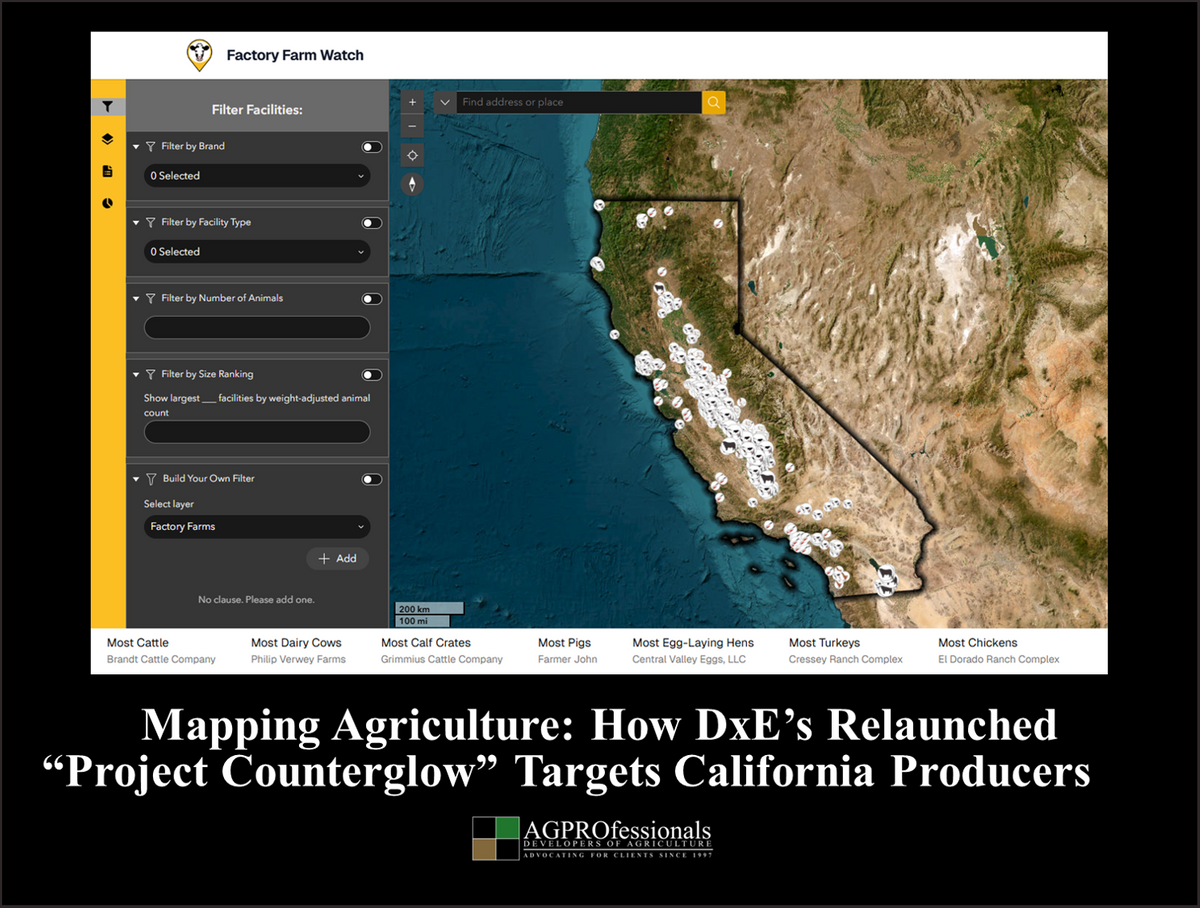
The animal rights group Direct Action Everywhere (DxE) has renewed its controversial mapping project, this time focusing on California agriculture through its “Factory Farm Watch” platform. DxE’s current California map builds on its earlier Project Counterglow map and database, which compiled and published the locations of tens of thousands of farms, ranches, and animal-related facilities across the United States. That project explicitly aimed to help activists “communicate, collaborate, and network” more effectively in pursuit of animal liberation goals.
The relaunch follows the same approach, but now with increased accuracy. The California-focused platform maps over 1,300 livestock operations, linking them to brands, emissions estimates, and activist-created narratives about animal care and environmental impact. DxE-aligned media openly states the purpose behind these mapping efforts: to support “coordinated activism” and put more pressure on the livestock industry.
Disinformation by Design
The Factory Farm Watch platform and its partner ecosystem, including FactoryFarms.org, heavily rely on narrative framing that misrepresents modern animal agriculture. The map attempts to “expose” links between farms and brands, implying that consumers are being misled. DxE claims that large operations can still be certified under animal welfare programs, suggesting those certifications are meaningless. This is a typical activist tactic: making the false claim that large modern farms neglect and mistreat animals while ignoring the most basic measurable welfare outcomes. It is a fundamental fact that when animals are mistreated or living under stress, they do not produce. Their claims completely ignore successful animal husbandry practices, nutritional management, veterinary care, and oversight.
U.S. animal agriculture contributes a fraction of total greenhouse gas emissions and continues to improve efficiency per unit of production. California producers are already among the most regulated and environmentally advanced in the world. Despite these facts, DxE materials repeatedly frame livestock as a dominant, unregulated climate threat.
The Constitutional Line: Public Data vs. Targeting Private Enterprise
Digital mapping platforms like the one DxE has created represent a new frontier in activist strategy by centralizing data and amplifying narratives. There’s no doubt about it; the mapping system helps animal rights activists enable coordinated pressure campaigns. For agricultural producers, this raises genuine concerns and security risks. It makes producers increasingly vulnerable to organized animal rights activism.
DxE defenders argue that the map relies on “public data.” That may be partly true, but it misses the constitutional issue at stake. The U.S. Constitution safeguards both private property rights and the right to operate lawful businesses free from harassment or intimidation. Publishing aggregated, searchable maps of private agricultural operations, along with activist narratives and calls to action, raises serious concerns, especially when the likely outcome is targeted protests, trespass, or economic pressure. Essentially, this issue is about more than just a map. It is about whether lawful farmers can operate without digital surveillance, public targeting, and misrepresentation by groups aiming to eliminate them.
Defending Agriculture, Property Rights, and Truth
We encourage producers to check the map to see if their operation is listed and review the information being shared. Evaluate your online presence. When someone searches for your farm, is your story told, or is someone else’s version? Make an effort to share your own story and stay connected, work with industry groups, legal advisors, and local agricultural networks. You’re not alone in these challenges, and a coordinated, informed response can make all the difference.
Livestock producers are among the most regulated, efficient, and dedicated in the world. They feed millions, care for their animals daily, and work under intense oversight and scrutiny. This boils down to who controls the story of agriculture, how producers are viewed by the public, and whether livestock operations are accurately understood or falsely portrayed.