
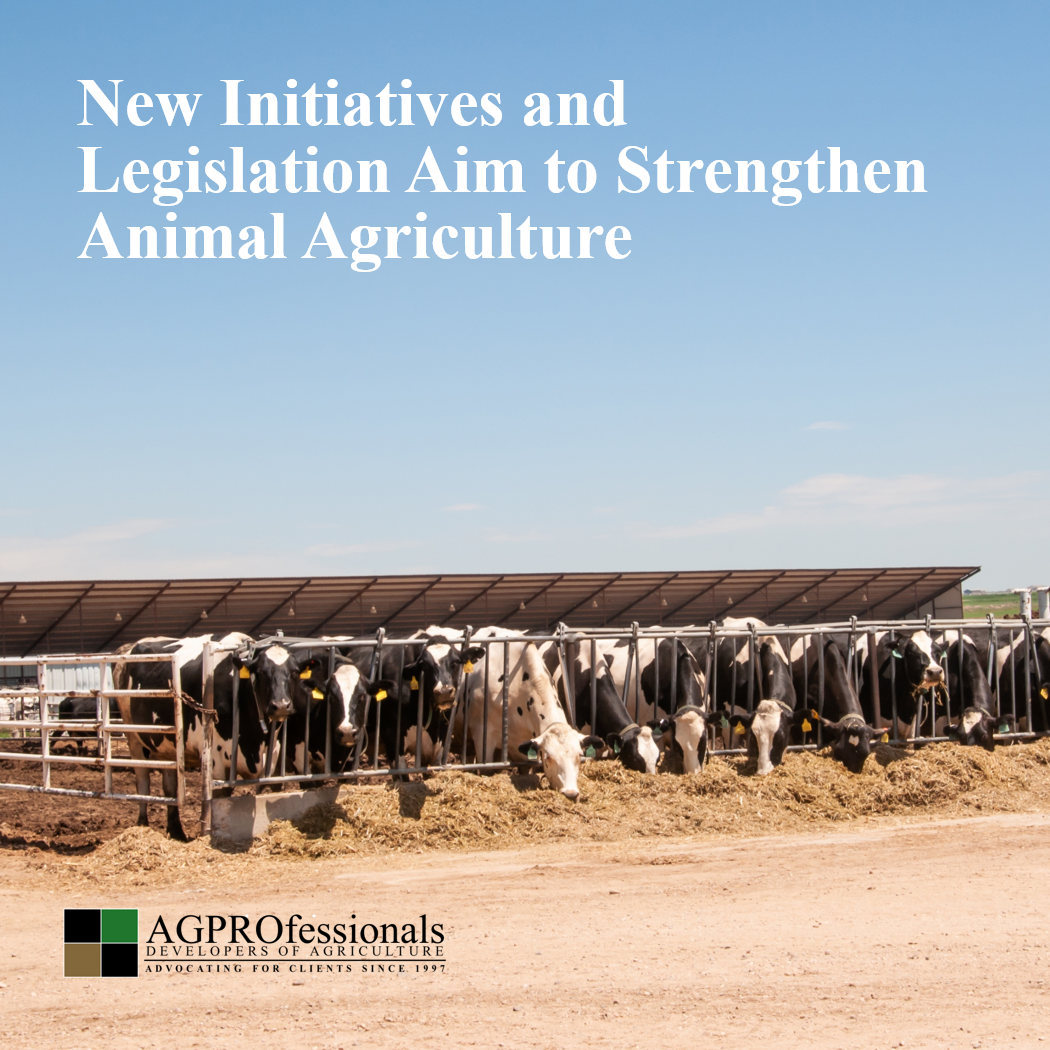
New Initiatives and Legislation Aim to Strengthen Animal Agriculture
New legislation, USDA initiatives, and a congressional resolution aim to strengthen American animal agriculture, expand domestic beef production, and protect the nation's food security. Colorado Congressman Gabe Evans (R-CO-8) is addressing these challenges by introducing the More Beef, Lower Prices Act (H.R. 10735), which would provide livestock producers with additional financial risk-management tools to rebuild their herds. The legislation complements efforts by U.S. Department of Agriculture (USDA) Secretary Brooke Rollins to strengthen domestic beef production and follows Evans' introduction of House Resolution 1598, which recognizes the economic, nutritional, and national security importance of American animal agriculture.
Farmers and ranchers across the nation cite years of drought, rising production costs, regulatory pressures, high market prices driven by supply and demand, and market uncertainty as contributors to declining cattle inventories. Unlike other agricultural commodities, cattle production involves lengthy biological cycles. Ranchers who retain replacement heifers must wait years before those animals contribute additional beef to the marketplace. Rebuilding those numbers requires substantial investments in breeding stock, infrastructure, feed, and land. These financial considerations can discourage herd expansion, even when market demand remains strong.
HR 10735 Amends Federal Crop Insurance Act
Introduced October 5, 2026, H.R. 10735 would amend the Federal Crop Insurance Act to expressly include bred cattle, replacement heifers, and cull cattle under federal livestock pilot-program authority beginning with the 2027 crop year. The legislation aims to expand risk-management protections under USDA's Livestock Risk Protection (LRP) program, helping producers manage market volatility while investing in future herd growth. By reducing financial uncertainty, the legislation seeks to encourage ranchers to retain breeding animals and expand domestic beef production.
The National Cattlemen's Beef Association (NCBA) has supported the legislation. Importantly, expanding cattle inventories is a long-term strategy. While additional domestic production could eventually help moderate beef prices, the legislation would not immediately lower grocery store prices.
USDA's Ranchers First Initiative Supports Herd Rebuilding
H.R. 10735 aligns with USDA's broader efforts to strengthen American cattle production. On August 31, 2026, Secretary Brooke Rollins announced the Ranchers First Initiative, building on USDA's October 2025 Plan to Fortify the American Beef Industry. A central component is the proposed Beef Retention and National Development (BRAND) endorsement under Livestock Risk Protection. BRAND is designed to help producers manage the economic risks of retaining heifers for breeding rather than selling them for slaughter. The proposed two-year protection would address situations in which an animal's slaughter value exceeds its economic value as breeding stock.
USDA's additional initiatives include expanding support for small and regional meat processors, improving access to grazing lands, reducing permitting delays, supporting beginning ranchers, and strengthening domestic beef procurement. The department has also announced up to $500 million through its Strengthening Processing for U.S. Ranchers (SPUR) program and expanded financing opportunities for independent processing facilities.
These efforts recognize that rebuilding America's beef industry requires more than increasing cattle numbers. Producers also need reliable processing capacity, affordable inputs, accessible grazing lands, and predictable regulatory conditions.
House Resolution 1598 Recognizes the Importance of Animal Agriculture
H. Res. 1598 is a resolution expressing support for American animal agriculture and recognizing its contributions to food security, lower food costs, and economic growth. Significantly, the resolution also addresses regulatory burdens and ideological campaigns targeting animal agriculture. It specifically references Denver's Initiated Ordinance 309, a 2024 ballot measure that sought to prohibit slaughterhouses within city limits. Colorado voters overwhelmingly rejected the proposal.
Although H. Res. 1598 does not change federal law, it clearly states Congress's support for domestic livestock production. The resolution acknowledges the nutritional importance of meat, dairy, poultry, and other animal-sourced foods while recognizing the role of livestock producers in rural economies and responsible land stewardship. Resolution 1598 calls on the government to reconsider unreasonable regulatory mandates that increase production costs, restrict consumer choice, and threaten the livelihoods of American farmers and ranchers.
Strengthening American Agriculture and Food Sovereignty
At AGPROfessionals, we recognize that protecting American agriculture requires practical policies that support producers, respect private property rights, and remove unnecessary obstacles to agricultural development. Together, H.R. 10735, H. Res. 1598, and USDA's Ranchers First Initiative highlight the importance of policies that enable American livestock producers to remain economically viable. A strong domestic cattle industry supports rural communities, creates employment opportunities, and provides nutrient-dense foods for American families.